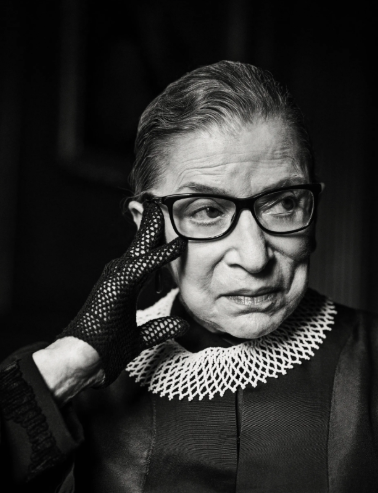
Judy Chicago: Giving Women a Seat at the Table
- Catherine Van Dorple

- Aug 15, 2025
- 4 min read
I was a little late to the party. Recently, I was at the Arkansas Museum of Fine Arts and
was introduced to Judy Chicago. Displayed in the museum was Chicago’s collection of
Compressed Women Who Yearned to be Butterflies. I stood at the paintings diving into the very lives of these women whose stories had been cut too short. Chicago unearthed these women’s stories and gave them new vessels to exist: butterflies. This piece stayed with me, and I’ll return to it later.
Since then, I’ve done research on Chicago and her voice in the feminist movement. I
believe, like Chicago, that women’s voices deserve to be highlighted in a world that tries to dim women. In this post I want to explore the numerous achievements of Judy Chicago and dive into a couple of her pieces.
Judy Chicago, a pioneer in using art to advocate for women, has been a transformative
figure in the art world for over six decades. Her expansive body of work includes sculpture,
painting, needlework, installation art, and more. She is best known for The Dinner Party, a
groundbreaking installation that centers women’s historical contributions through symbolic place settings.
Over the years, Chicago’s influence has been recognized through numerous honors. She
received the Visionary Woman Award (2004), was named a National Women’s History MuseumHonoree, and earned the Governor’s Award for Excellence in the Arts from New Mexico (2009). In 2020, she was given the College Art Association’s Distinguished Feminist Award. She has also been honored by the Feminist Majority Foundation and in 2018, was named one of Time Magazine’s “100 Most Influential People.” Through both her art and activism, Chicago continues to leave an unmistakable mark on
the worlds of art and feminism.
One of Judy Chicago’s most iconic and ambitious works is The Dinner Party, a
large-scale installation that embodies her commitment to honoring women’s contributions
throughout history. The piece is permanently housed in the Elizabeth A. Sackler Center for
Feminist Art at the Brooklyn Museum. It features a triangular ceremonial table with 39 place
settings, each honoring a historical or mythical woman from Hypatia, the ancient mathematician, to Sojourner Truth, the abolitionist and women’s rights activist, and Virginia Woolf, the influential modernist writer. In a world where women aren’t privileged with a seat at the table, Chicago created her own table and selected the women she believed deserved a seat at the table.
Each woman is honored with a custom embroidered placemat and a handmade plate,
often featuring sculptural, symbolic imagery that reflects her life, legacy, and cultural
background. Most plates are either painted or a mosaic. Beneath the table lies the Heritage Floor, which includes the names of 999 additional women, expanding the conversation far beyond the table itself. In Chicago’s own way, she gave each of these women a literal and figurative seat at the table. In a world where women have been denied power and presence, The Dinner Party invites women to reclaim space not just by being included, but by rewriting the narrative altogether.
My favorite piece by Judy Chicago is Compressed Women Who Yearned to Be Butterflies.
This series of six pastel drawings tells the stories of six real women whose lives were stifled by
mental illness, societal repression, or institutional neglect. Each panel combines personal quotes from the women and letters Chicago wrote to them as if giving them the validation they never received in life. She sympathizes with them while acknowledging the way these women have been wronged. The drawings center on women like Agnes Richter, a seamstress committed to an asylum who embroidered her life story into her straitjacket, her body and work literally confined. There’s also Elizabeth Packard, institutionalized by her husband for expressing religious views he disagreed with. Another, Maud Stevens Wagner, was a pioneering female tattoo artist whose story pushes against expectations of female beauty and conformity. Others include Camille Claudel, Aloïse Corbaz, and Anna O.
Chicago’s use of the word “compressed” isn’t just about their treatment, but the way their
voices were compacted into margins, medical records, or erased entirely. These drawings give
their stories space. The butterflies serve as a way to show that while these women were confined, they still had inner potential that yearned to take flight.
The stories weigh on your shoulders as you read about women whose entire lives were
dictated by men. Chicago is able to transform these women and allow them to not be weighed
down by their own pasts, and take flight.
Judy Chicago has been a groundbreaking voice in the feminist movement. In addition to
her art highlighting women’s voices she founded the first feminist art program in the United
States at Fresno State College in 1970. She continues to mentor and inspire artists around the
globe advocating for lasting institutional change in museums and galleries that have historically sidelined women. Most importantly, she has shown us that when doors don’t open, we can build our own rooms entirely.
Source:
Chicago, Judy. “Judy Chicago.” Judy Chicago, judychicago.com/.
Catherine Van Dorple, Cabot, AR, 12th Grade, Instagram - @catherine_vandorple